Operating models
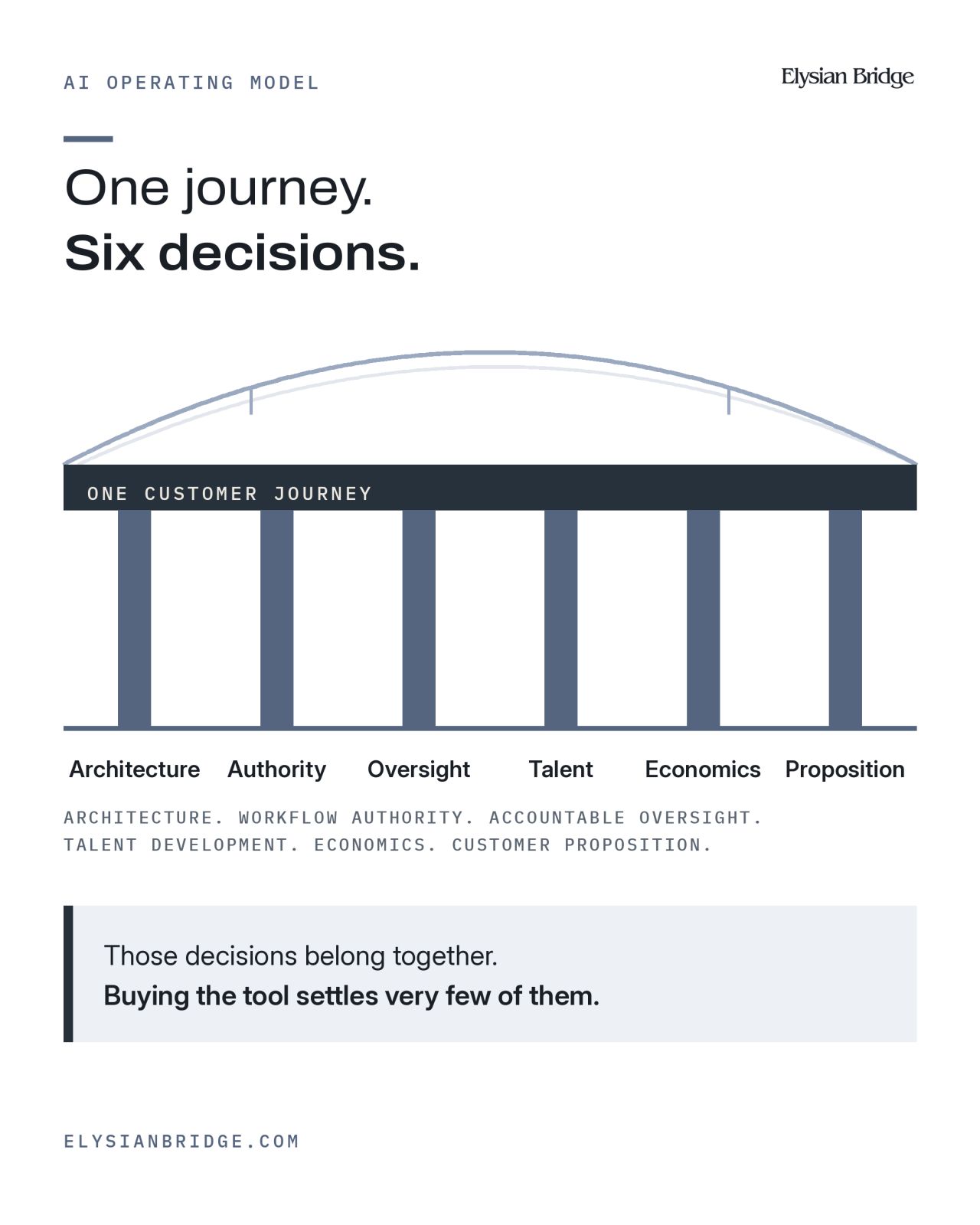
One journey. Six decisions.
The strongest advisory work we do is helping a company design how it will operate with AI. That requires decisions across six connected areas.
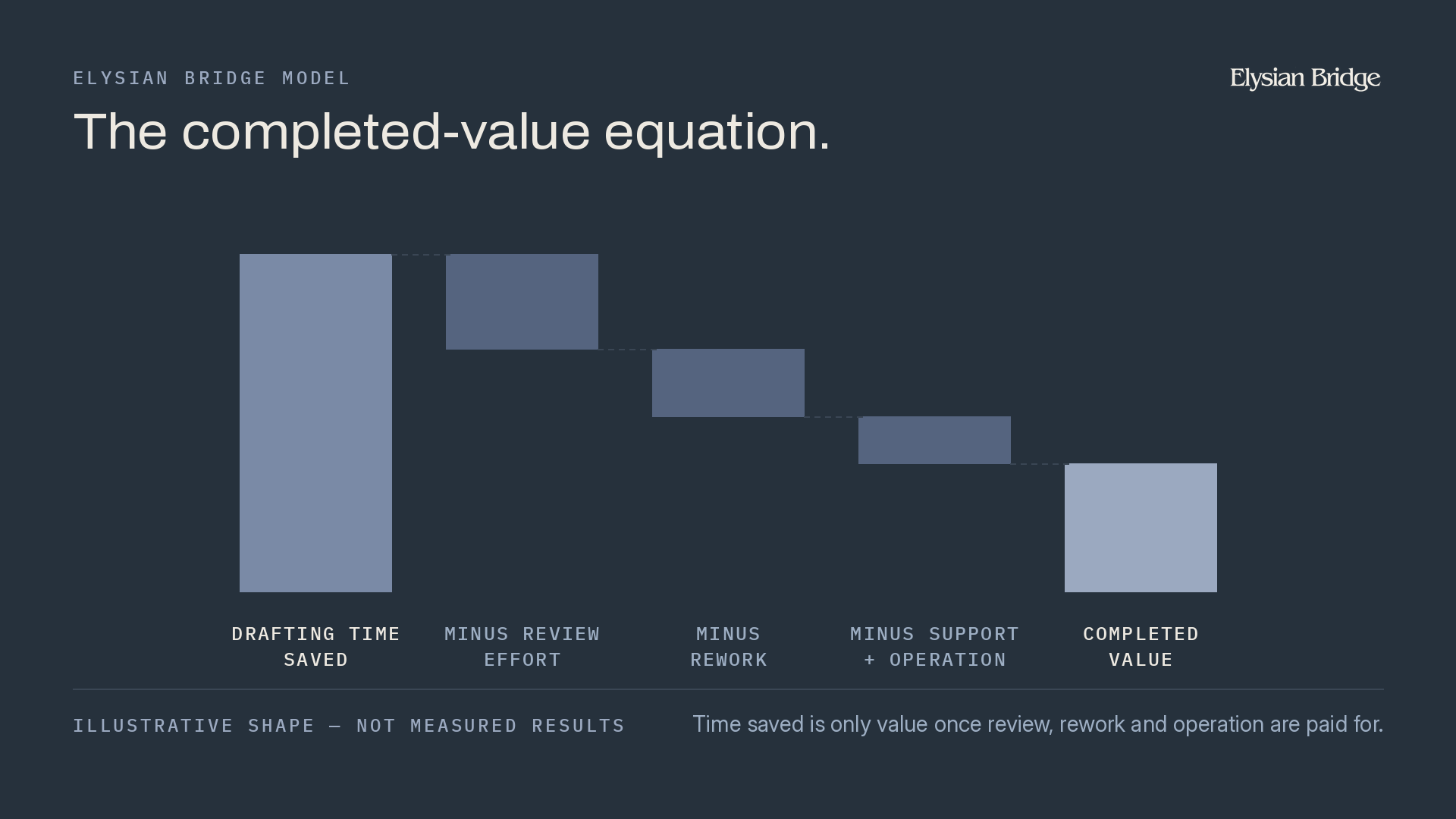
Architecture determines how systems and data fit together. Workflow authority defines what AI may do and who can approve an exception. Oversight sets the standards, professional controls and recovery processes that keep the work dependable. Talent development asks how people build judgment as the tasks change. Economics examines the full cost of delivery, including review and rework, and how the value is shared.
The customer proposition states what the customer shouldactually receive: better service, faster decisions, or an offering that was previously impractical.
Consider a company using AI to prepare customer proposals. Faster drafting is the easy part.
- Who can commit to a price?
- Which information may the system use?
- How will junior colleagues learn to judge a proposal when they no longer write the first one?
- Does the saving improve margin, lower prices or fund better service?
Those decisions belong together. Buying the tool settles very few of them.
We would start with one customer journey that matters, and bring the people responsible for technology, delivery, risk, talent and commercial performance into the same conversation.
That is where human-first AI stops being a principle and becomes an operating model: a clear account of how people and systems create value, exercise authority and remain accountable for the result.
Let’s have a conversation.
Book a conversation