AI governance
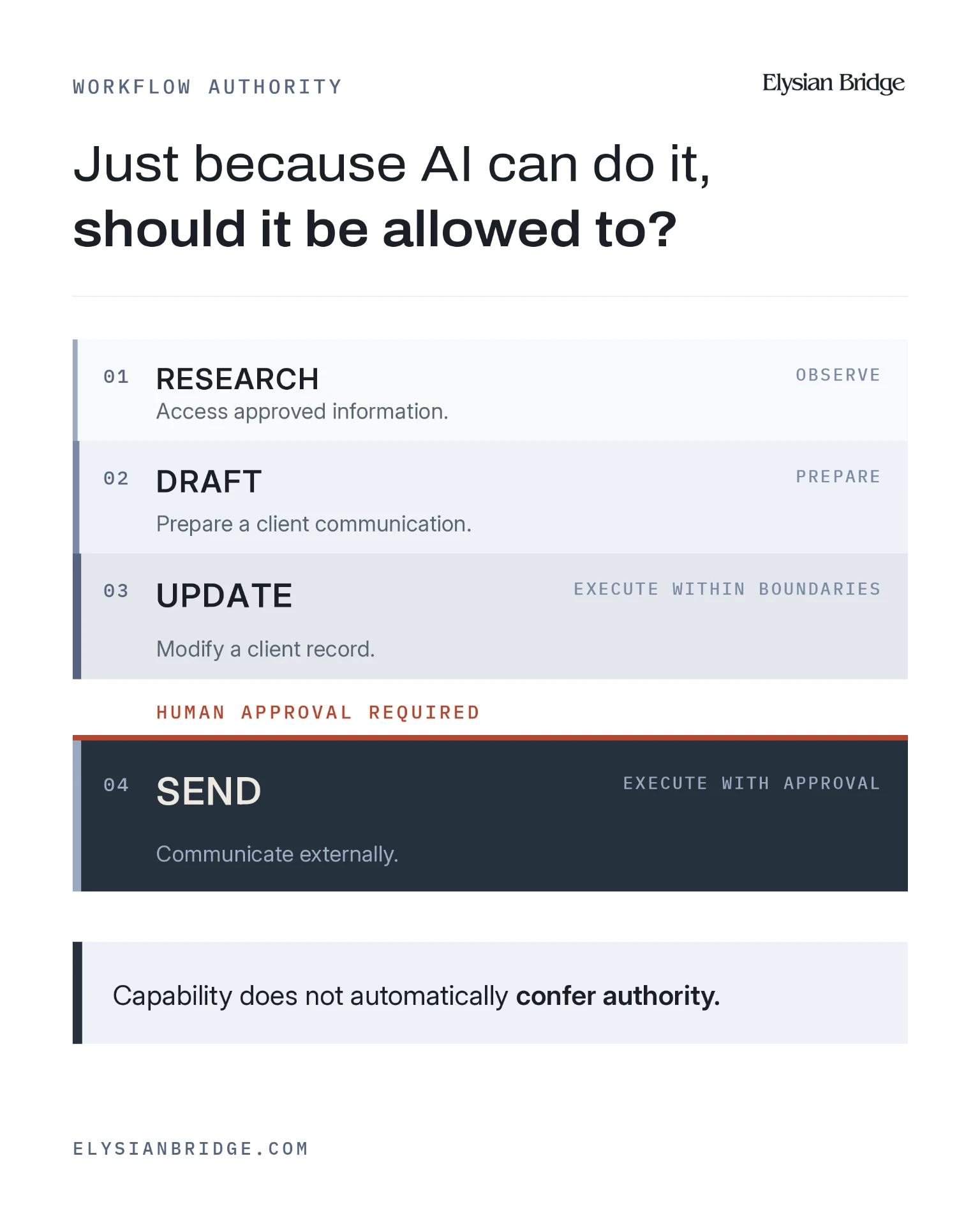
An AI agent can draft a client email. That doesn’t mean it should be allowed to send it.
As organisations move from AI that produces answers to AI that performs actions, this distinction becomes increasingly important. McKinsey’s 2026 survey found that 40% of respondents at large enterprises reported scaling AI agents, up from 27% a year earlier.
But the controls surrounding these systems are developing unevenly. Microsoft is introducing task-specific permissions and human approval controls, while a LangChain survey found that 89% of respondents reported some form of agent observability, but only 52% reported offline evaluations. Being able to monitor an agent is not the same as knowing its behaviour has been adequately tested.
Consider a law firm’s business-development workflow. Researching a prospect, drafting a follow-up, updating a client record and sending an email may belong to the same process, but each carries different risks and requires different levels of authority.
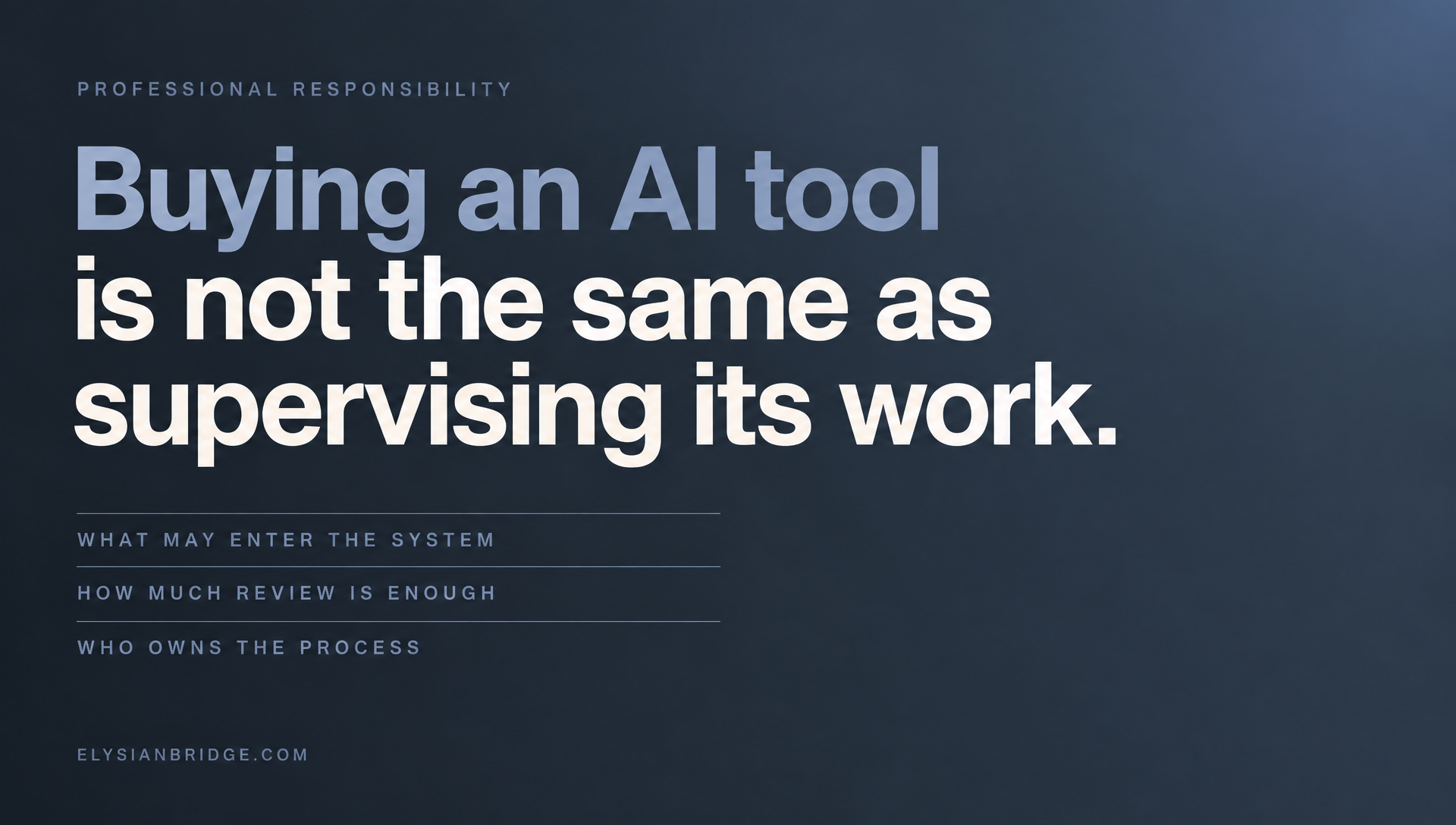
For business leaders, the question is no longer simply what AI can do. It is what AI should be authorised to do, under whose supervision, and with what safeguards.
Capability does not automatically confer authority.
Let’s have a conversation.
Book a conversationGet the next insight
Catch up on AI in five minutes a week.